

Friday, March 31, 2017

Hop Aroma Compounds
Aroma-active compounds in 'Centennial', 'Citra' and 'Nelson Sauvin' hop varieties and their aroma contribution to dry-hopped beer
Author: Feng, Shi
"The objectives of this study were to:


Author: Feng, Shi
"The objectives of this study were to:
- Measure and compare the compositional differences of essential oil among three hop cultivars ('Centennial’, 'Citra' and 'Nelson Sauvin'),
- Identify the odor-active aroma compounds in three varieties of hops and
- Investigate the behavior of hop-derived aroma compounds in beers prepared by dry-hopping approach with three hop varieties.


Hops Genetic Tree

Source: Here
Quantitative trait loci in hop (Humulus lupulusL.) reveal complex genetic architecture underlying variation in sex, yield and cone chemistry
Erin L McAdam (Email author), Jules S Freeman, Simon P Whittock, Emily J Buck, Jernej Jakse, Andreja Cerenak, Branka Javornik, Andrzej Kilian, Cai-Hong Wang, Dave Andersen, René E Vaillancourt, Jason Carling, Ron Beatson, Lawrence Graham, Donna Graham, Peter Darby and Anthony Koutoulis
BMC Genomics 2013 14:360
Source: Here
Wednesday, March 29, 2017
Hop Oil Composition Reference Chart
This chart uses a heat map approach for comparing Hop oil composition. All the columns add up to 100%. Green represents the highest from the column average and red represents the lowest from the column average. This approach hopefully makes it easier to spot similarities or differences between Hop varieties. - Jim (PharmBrewer)


See Scott Janish's great work and database: Here
Monday, March 27, 2017
The 'Haze Craze': Beer Lovers' Newfound Obsession With Murky IPAs

"About 13 years ago, The Alchemist brewery in Waterbury, Vt., released a new IPA called Heady Topper. The brewer, John Kimmich, had decided to neither filter nor pasteurize the beer — both common methods of extending a commercial beer's shelf life. The result was an IPA thicker with the microscopic compounds and particulates that add flavor and aroma. Customers noticed and praised the beer as being especially tasty.
They also noticed the beer's appearance: Heady Topper was unusually murky and opaque, almost like orange juice. Even though Kimmich says the beer's turbidity was never a concern of his, it became a point of focus for many of his customers. Other brewers noticed, too, and some began making their own hazy IPAs. For the next decade, the style remained modestly popular as an East Coast specialty.
Then, a few months ago, hazy IPAs exploded onto the national beer scene. No one can explain this sudden explosion, but beers with the appearance of pulpy fruit juice have swept across the country since then. The phenomenon is now billed the "haze craze." And in the past several months, these so-called New England IPAs have hit the West Coast like a wild dust storm."
Read the rest of the article: Here
Friday, March 24, 2017
Pharmacist Wins Brewing Competition
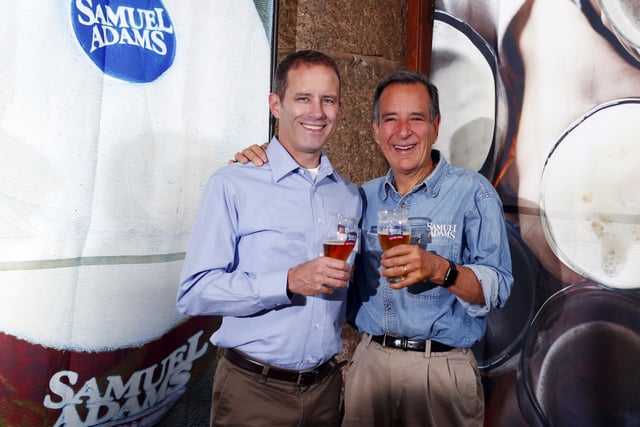
The science and technique of preparing and dispensing drugs is probably not unlike the science and execution of brewing and dispensing beer. They are both health sciences, right? Avon, Ohio’s David Cousino sees the connection. The Cleveland-area pharmacist began homebrewing nearly 25 years ago in college, and after a long hiatus, jumped back into the hobby recently. In fact, he used that scientifically tuned brain of his to become a national contender on the brewing scene, recently winning Samuel Adams’ LongShot American Homebrew Competition.
The Monsters, the UFC championship, the Cavaliers, the Longshot competition — Cleveland has never won so much in its municipal career. Might as well put the Indians World Series in the books. Cousino won the competition with a saison. Other winners were Duane Wilson of New York with his American wild ale, and in the competition among Samuel Adams employees, Graham Johnson with his imperial stout.
The brewers from Sam Adams announced the three winners during the Great American Beer Festival in Denver (read our summary of the event). The 2016 LongShot winners join a distinguished group of homebrewers, including some that launched professional brewing careers after their win including: Don Oliver, a 2006 winner; Mike Robinson, a 2009 winner; Cesar Marron, a 2013 winner; Tim Thomssen, a 2015 winner, to name just a few. Here’s a quote from the press release:
Source: Here“I started out as a homebrewer and saw my dream of becoming a professional brewer turn into a reality,” said Jim Koch, Samuel Adams Brewer and Founder. “Since we started the LongShot competition 20 years ago, we’ve seen an explosion of interest in brewing, and we’re honored to showcase top emerging talent from the homebrewer community with this year’s Contest.”
Wednesday, March 22, 2017

Monday, March 20, 2017
Friday, March 17, 2017

Wednesday, March 15, 2017
Singha Clone
Mash together:
- 9.25 lbs British 2-row pale malt
- 1.5 lbs flaked maize
- 1 lb rice hulls
- 1/2 lb dextrin malt
- 3/4 lb German light crystal malt
- 1/4 lb German Munich malt
Hops:
- 1 oz. Northern Brewer (9% AA) – 90 minutes
- 1/2 oz. German Hallertau Hersbucker – 10 minutes
- 1/2 oz. Czech Saaz – 10 minutes
Other Ingredients:
- 1 tsp. Irish moss – 10 minutes
Yeast:
- Wyeast 2206 Bavarian lager yeast
Ferment at 42-52 degrees for about a week, transfer to a secondary, and bottle or keg after two more weeks. Allow it to age a bit, perhaps another couple weeks.
Source: Here

Monday, March 13, 2017
Growing Hops
It's spring and that means the start of hop growing season! Some of you might already grow hops and some of you might be thinking about growing hops. In this post, I'll be discussing raising hops at home. This isn't information based on some randomness that's been passed down in homebrew lore over the years or designed for commercial growers. This is all firsthand experience growing hops at home over many years and learning what works and what doesn't.
Source: Here

Source: Here

Friday, March 10, 2017
Jeanne's Hard Lemonade
850 grams sugar
150 grams lactose for sweetening
3 fresh lemons
3 tablespoons lemon concentrate
10 grams fresh ginger, grated
1 teaspoon of yeast nutrient
1/4 tsp Herbs de Provence
6g Safale S-04 yeast
Slice the lemons and then chop into small cubes. Leave the peel on.
Heat 2.5 L water half way to boiling on the stove and add the dextrose, lemons, ginger, and lactose (if using). Add the yeast nutrients here too.
Simmer for 15~20 minutes.
At this point I add some cold, filtered tap water to the fermenter, around 2.5 liters
Through a filter/muslin cloth/cheese cloth, strain the sugar/lemon mix into the fermenter.
Top with more cold filtered tap water, adjusting temperature to hit 18~20ºC (64-68F). Pitch the yeast (rehydrated of course!).
Ferment then bottle / keg as you would a beer.

150 grams lactose for sweetening
3 fresh lemons
3 tablespoons lemon concentrate
10 grams fresh ginger, grated
1 teaspoon of yeast nutrient
1/4 tsp Herbs de Provence
6g Safale S-04 yeast
Slice the lemons and then chop into small cubes. Leave the peel on.
Simmer for 15~20 minutes.
At this point I add some cold, filtered tap water to the fermenter, around 2.5 liters
Through a filter/muslin cloth/cheese cloth, strain the sugar/lemon mix into the fermenter.
Top with more cold filtered tap water, adjusting temperature to hit 18~20ºC (64-68F). Pitch the yeast (rehydrated of course!).
Ferment then bottle / keg as you would a beer.

Monday, March 6, 2017

Friday, March 3, 2017


Wednesday, March 1, 2017
Subscribe to:
Posts (Atom)